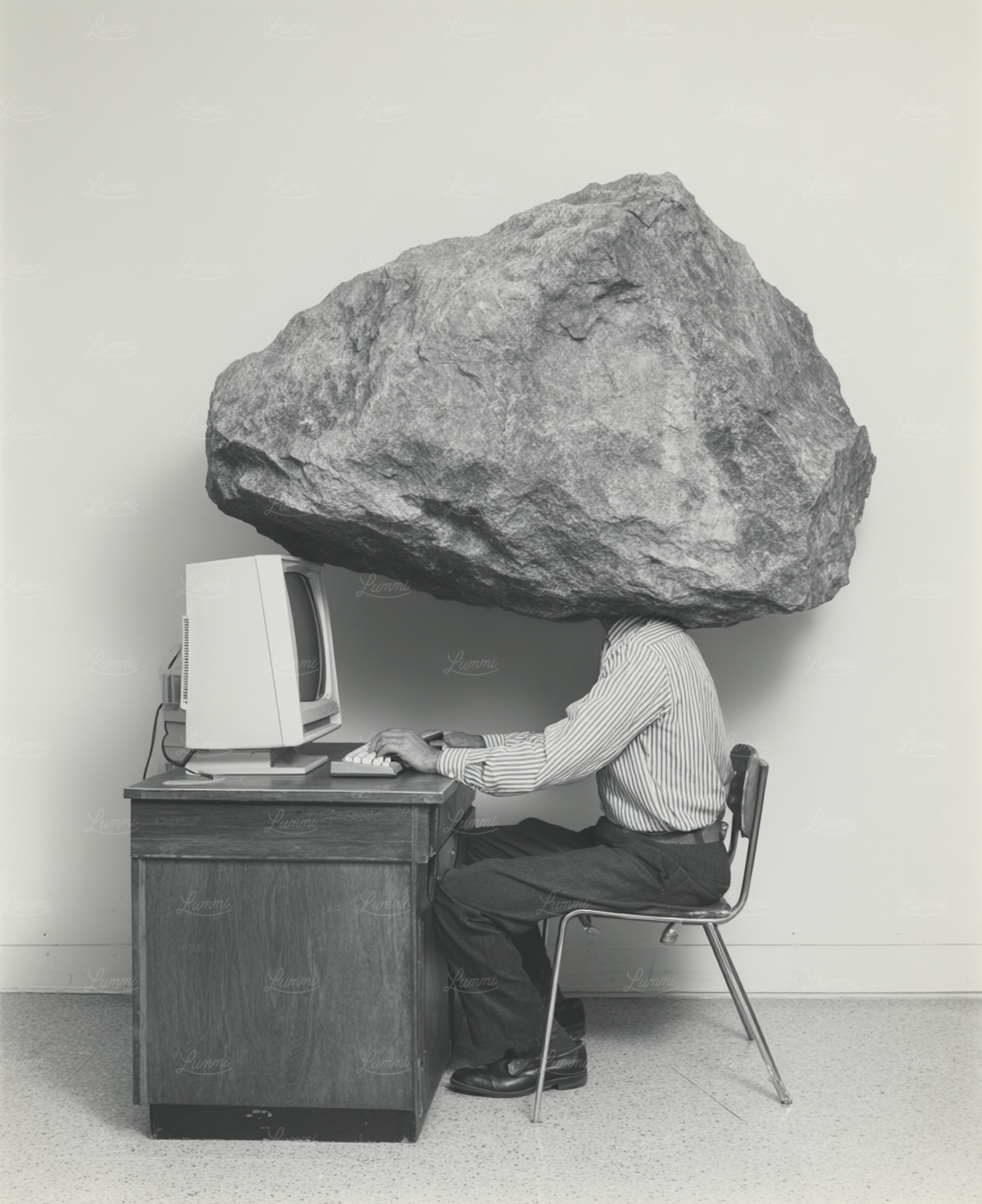
Under stress, your body releases hormones that trigger a specific, well-mapped set of physical changes. It is not vague, and it is not a character weakness. It is a system that evolved to run for a few minutes and then stand down, and almost everything that goes wrong with stress comes from that second half failing to happen.
What changes, physically?
The National Center for Complementary and Integrative Health describes it in two sentences: "When you're under stress, your body reacts by releasing hormones that produce the 'fight-or-flight' response." And then the effects: "Your heart rate, breathing rate, and blood pressure go up, your muscles tense, and you sweat more."
Every one of those is useful if you are about to run or fight. More oxygen, more blood to the muscles, faster reactions. The system is not malfunctioning when it does this. It is doing its job.
Which systems are actually doing the work?
Two of them, running on different timescales. A review published via PubMed Central describes the HPA axis, which "reacts to stressors by secreting cortisol, a chemical that prepares the body for fight and flight conditions and is a significant biomarker for stress."
Alongside it runs a faster chemical response: "During a stressful condition, catecholamines level increases while acetylcholine decreases, regulating the fight, and flight response." Catecholamines are the family that includes adrenaline, which is the part you feel immediately.
| Response | What it does | Speed |
|---|---|---|
| Catecholamines, including adrenaline | The immediate surge: heart rate, breathing, alertness | Seconds |
| HPA axis and cortisol | Sustains the prepared state; a significant biomarker for stress | Minutes onward |
So why is stress treated as a health problem?
Because of how long it stays on, not how hard it hits. The National Institute of Mental Health draws the distinction clearly: "A stressor may be a one-time or short-term occurrence, or it can happen repeatedly over a long time."
It is the second kind that causes trouble, and NIMH is specific about where: "You could experience problems with sleeping, or with your immune, digestive, cardiovascular, and reproductive systems." NCCIH describes the same pattern, noting that long-term stress "may contribute to or worsen a range of health problems including digestive disorders, headaches, sleep disorders, and other symptoms."
The PubMed Central review puts it more bluntly still, noting that persistent stress "affects the vital organs such as the brain, heart, or liver."
Is the goal to stop the response happening?
No, and aiming for that tends to make things worse. A nervous system that never escalates is not a healthy one; it is an unresponsive one. The realistic target is a system that can ramp up when something genuinely warrants it and then come back down afterwards.
That reframing matters practically, because it changes what you measure. The useful question is not how calm you feel on a good day. It is how quickly you return to baseline after a bad one. Our piece on reframing the body's alarm system goes further into this.
What brings it down?
The strategies NIMH names are notably unglamorous: "Stick to a sleep routine, and make sure you are getting enough sleep", and "Reach out to your friends or family members who help you cope in a positive way."
- Sleep is both a casualty of stress and one of the main defences against it, which makes it the highest-leverage place to start. See our guide to better sleep.
- Movement is consistently recommended and does not need to be strenuous. See our guide to everyday movement.
- People, specifically the ones who help you cope rather than escalate.
- Deliberate recovery, including breathwork, which acts on the breathing rate the stress response just raised.
When to talk to someone
NIMH sets the threshold low, and deliberately: "If you are struggling to cope, or the symptoms of your stress or anxiety won't go away, it may be time to talk to a professional." You do not need to be in crisis, and you do not need to have tried everything else first.