To sleep better, the four changes with the most leverage are these: get up at the same time every day, put bright light in front of your eyes soon after waking, keep caffeine to the earlier part of the day, and spend the last hour before bed somewhere dark, cool, and screen-free. These habits act directly on the two biological systems that decide when you feel sleepy: your internal body clock and the sleep drive that accumulates while you are awake. That is why they tend to do more for most people than any single product, gadget, or supplement.
What follows explains how those two systems work, what research has observed about the most common sleep disruptors, and where the line sits between an ordinary rough patch and a pattern worth raising with a clinician.
How much sleep do adults actually need?
Federal guidance puts the target at seven or more hours a night for most adults. The CDC's sleep recommendations break it down by age:
| Age group | Recommended sleep per night |
|---|---|
| 18–60 years | 7 or more hours |
| 61–64 years | 7–9 hours |
| 65 years and older | 7–8 hours |
These are population ranges, not personal prescriptions. Some people function well near the bottom of their range and some need more, and the honest test is how you feel during the day rather than what a tracker reports in the morning.
Falling short matters. The National Heart, Lung, and Blood Institute uses the broader term sleep deficiency to cover not just short sleep but sleeping at the wrong times, sleeping poorly, or having an untreated sleep disorder. It links sleep deficiency to heart disease, high blood pressure, diabetes, stroke, obesity, and depression, notes that drowsiness at the wheel contributes to serious crashes, and pushes back on the common belief that people simply adapt to running short. Roughly one in three American adults report not getting enough sleep.
What are the stages of sleep, and why does the mix matter?
Sleep architecture is the term for how a night of sleep is structured: which stages you pass through, in what order, and for how long. A night is not one flat state. According to the National Academies' review of sleep physiology hosted by the NIH, sleep divides into non-REM and REM, and you cycle between them repeatedly.
| Stage | What it is | Where it sits in the night |
|---|---|---|
| Light non-REM | The transition into sleep and the stable light sleep that follows; the largest single share of the night | Spread throughout; roughly 45–55% of total sleep |
| Slow-wave sleep (deep sleep) | The deepest non-REM stages, named for the large slow brain waves that appear on an EEG; hardest to be woken from | Concentrated in the first third of the night |
| REM sleep | Rapid eye movement sleep: bursts of eye movement, near-total muscle relaxation, and brain activity closer to waking; where most vivid dreaming happens | Grows longer with each cycle; heaviest before morning |
Non-REM makes up about 75 to 80 percent of a night and REM the remaining 20 to 25 percent. The first cycle runs roughly 70 to 100 minutes; later cycles stretch to about 90 to 120 minutes. The practical consequence is that cutting a night short does not shave evenly off every stage. Because REM loads toward the end of the night, an alarm set two hours early takes a disproportionate bite out of it.
Why do you feel wired at midnight but wrecked at 3pm?
Two separate systems set your sleepiness, and the two do not necessarily line up. The first is your circadian rhythm, the roughly 24-hour cycle of physical, mental, and behavioral changes your body runs on. As the National Institute of General Medical Sciences explains, a master clock in the brain called the suprachiasmatic nucleus keeps this rhythm on time, and light and dark are its biggest influence, though food, stress, activity, and temperature also nudge it. That clock governs melatonin, the hormone that rises in the evening and helps bring on sleepiness, based on how much light your eyes take in. The same source notes that light from electronic devices at night can confuse biological clocks.
The second system is sleep pressure, also called homeostatic sleep drive: the need for sleep builds across the day, peaks just before bedtime, and dissipates overnight, while the circadian system runs a competing wake-promoting signal. Popular writing often describes sleep pressure as the buildup of a sleep-signaling molecule called adenosine, which caffeine is commonly said to block.
An evening where you are exhausted but cannot switch off usually means these two are out of sync: enough sleep pressure to want sleep, but a clock still running a wake signal because it got its cues late.
What is sleep latency, and how long should falling asleep take?
Sleep latency is the gap between lights-out and actually falling asleep. There is no single correct number, and it varies night to night with stress, activity, and what time you went to bed relative to your own clock. What is more informative than any one night is the pattern: consistently lying awake for long stretches, most nights, over weeks or months is the kind of thing worth describing to a clinician rather than troubleshooting indefinitely on your own.
Do caffeine and alcohol really change your sleep that much?
Both do, and both are easy to underestimate because their effects are largely invisible from the inside. In a controlled trial published in the Journal of Clinical Sleep Medicine, researchers gave participants 400 mg of caffeine at bedtime, three hours before bed, and six hours before bed. Even the six-hour-early dose cut objectively measured total sleep time by more than an hour, and at that distance the disruption showed up on the objective measure while participants' own sleep diaries did not clearly register it. The researchers argued for continued education regarding the sleep disruptive effects of caffeine.
Alcohol produces a different and more deceptive pattern. A review of alcohol and the sleeping brain describes shortened time to fall asleep and increased slow-wave sleep in the first half of the night, with REM sleep suppressed and delayed, then disrupted sleep in the second half, with more wakefulness and light sleep. The authors describe a downward spiral in which poor sleep gets self-treated with alcohol, which produces fast sleep onset and then a worse second half.
| Caffeine | Alcohol | |
|---|---|---|
| Effect on falling asleep | Delays it, including hours after the last cup | Speeds it up |
| Effect later in the night | Reduces total sleep time | More waking and lighter sleep in the second half |
| Do people notice? | Largely not, when taken in the afternoon | Often experienced as "falling asleep easily" |
| Practical read | Watch the timing of the last serving, not just the count | A nightcap trades early sedation for later fragmentation |
Does what you do during the day change how you sleep at night?
Daytime behavior sets up the night, and light is the single strongest lever. Because light and dark exert the biggest influence on circadian timing, morning light exposure is one of the cheapest ways to anchor a drifting clock. Stepping outside shortly after waking gives the eyes a far stronger signal than indoor lighting does.
Movement helps too, though with more nuance than fitness marketing suggests. A systematic review and meta-analysis of randomized trials found that exercise improved self-reported sleep quality in people with insomnia without notable adverse effects, and the authors called it a promising non-drug option. Notably, the same analysis did not find significant improvements in objectively measured sleep latency or sleep efficiency, so exercise is worth doing, but expectations should sit closer to "helps how sleep feels" than "rebuilds the night."
Evenings are where light works against you. Since device light at night can confuse the body clock, the last stretch of the day is the place to dim things down; our guide to winding down from screens at night covers how to build that hour without giving up your evening entirely.
What should your bedroom actually be like?
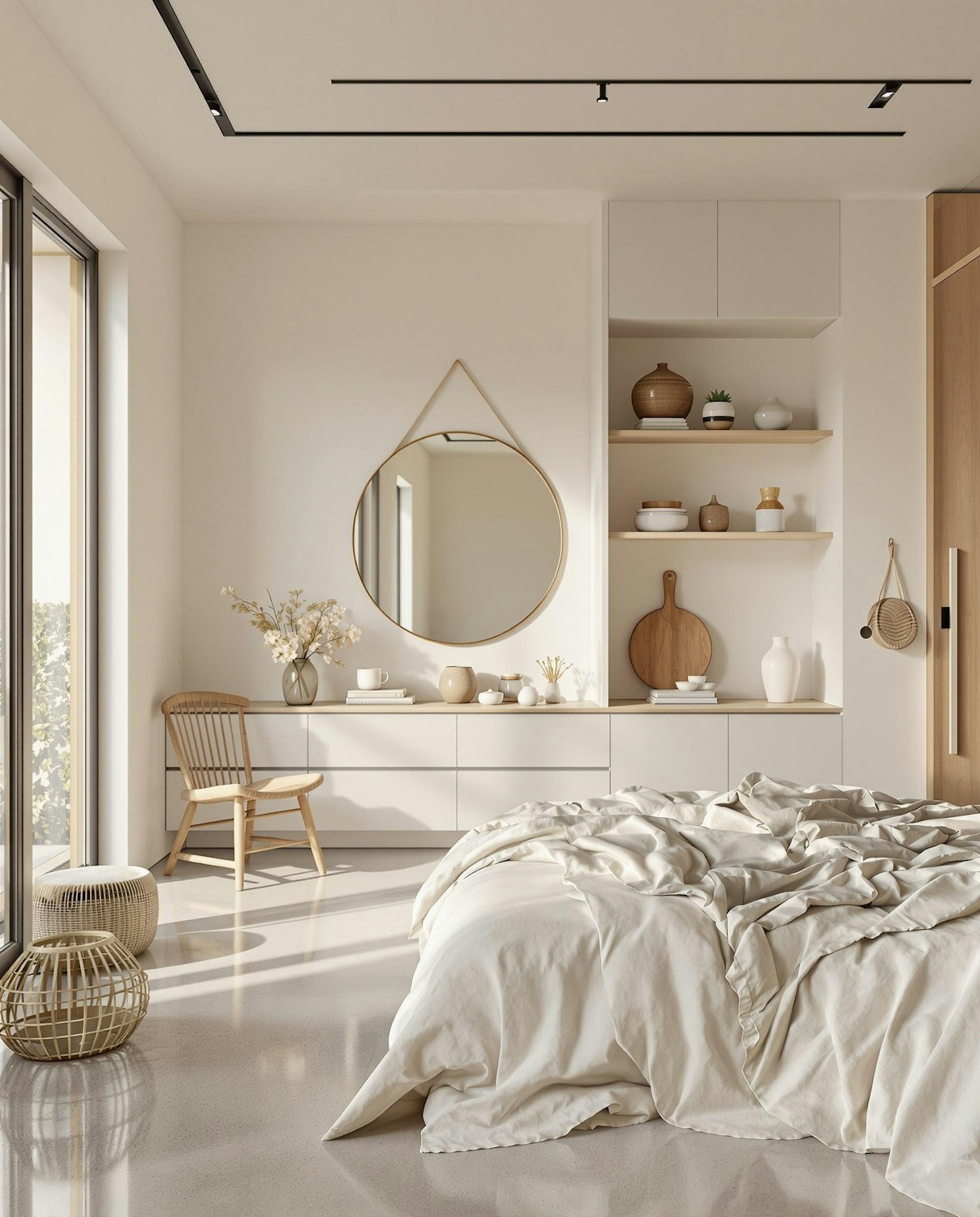
Dark, quiet, cool, and comfortable. NIOSH guidance from the CDC on creating a good sleep environment states plainly that such an environment can improve sleep, and puts most of its emphasis on darkness: room-darkening shades, heavy draperies, blocking light leaking from doorways and electronics, and eye masks where outside light cannot be controlled.
A short audit of your own room:
- Stand in the dark for a minute and find every light source: standby LEDs, chargers, a streetlight through a gap in the curtain.
- Deal with predictable noise at the source where you can, and mask what you cannot.
- Err cool rather than warm; a room that is too warm is a common and easily fixed disruptor.
- Reserve the bed for sleep and intimacy, so your brain stops associating it with work, scrolling, and problem-solving.
Why do you wake up at 3am?
Brief awakenings between sleep cycles are an ordinary feature of a normal night, and they cluster in the second half for a structural reason: deep slow-wave sleep is concentrated in the first third of the night, while later cycles are increasingly REM-heavy and lighter, which makes you easier to rouse toward morning. Noticing a 3am awakening does not mean something has gone wrong.
What turns a normal awakening into an hour of lying there is usually what happens next. Common contributors include alcohol earlier in the evening, whose second-half rebound produces exactly this pattern; a too-warm room; and the frustration loop of watching the clock. The response that sleep clinicians build into treatment is counterintuitive: if you are awake and irritated, get out of bed and do something dull in dim light until you feel sleepy again, so that bed stays associated with sleeping rather than with lying awake.
Are you a night owl or a morning person, and does it matter?
Chronotype is the term for your natural timing preference: whether your body clock runs early, late, or somewhere in the middle. It is a real individual difference, not a character flaw, and it explains why identical bedtimes produce very different results for two people in the same household.
The practical implication is not to fight your chronotype but to stop working against it accidentally. Since light is the dominant input to circadian timing, a late chronotype who gets no morning light and plenty of evening screen light is reinforcing the lateness daily. Shifting timing is a gradual project measured in weeks, and the anchor that matters most is a consistent wake time.
Can you make up for lost sleep on the weekend?
Partly, but it is not a clean trade. Sleeping in helps with immediate grogginess, yet it also pushes your body clock later, which is why Sunday night insomnia is such a familiar experience. Two late mornings are enough to shift your timing. The NHLBI explicitly counters the idea that people can adapt to chronic sleep loss without consequences, so a weekend catch-up is better understood as damage control than as a strategy. If you are digging out of a long stretch of short nights, our guide to recovering accumulated sleep debt walks through doing it without wrecking your schedule.
What actually helps when poor sleep has lasted for months?
At that point the answer shifts from habits to structured treatment, and it is a conversation to have with a clinician rather than a self-directed project. The NHLBI's insomnia treatment page describes cognitive behavioral therapy for insomnia (CBT-I) as usually the first treatment option recommended for long-term insomnia, delivered as a roughly 6- to 8-week plan. Its components include stimulus control therapy, which rebuilds the link between being in bed and being asleep; sleep restriction therapy, which sets a specific amount of time to spend in bed; plus cognitive therapy, relaxation techniques, and sleep education. It can be delivered in person, by telephone, or online.
When should you stop troubleshooting and talk to a clinician?
Self-help has limits, and some patterns point toward conditions that need proper evaluation rather than better habits. Raise it with a healthcare provider if you notice:
- Difficulty falling or staying asleep that has persisted for months rather than weeks.
- Loud, frequent snoring, breathing that starts and stops, or gasping for air during sleep, symptoms the NHLBI lists for sleep apnea, which it notes people often do not know about until someone else tells them.
- Daytime sleepiness heavy enough to interfere with focus, learning, or driving.
- Sleep problems arriving alongside low mood, anxiety, or another health change.
The NHLBI advises talking to a provider about these symptoms and notes that a sleep study may be needed. That is a far better use of your energy than another month of experimenting alone.
What does a realistic first week look like?
Change one system at a time rather than overhauling everything at once. A workable first week:
- Pick a wake time you can hold seven days a week, including weekends, and set it as the fixed anchor. Bedtime follows from it.
- Get outside for a few minutes of daylight within an hour of waking.
- Move your last caffeine of the day earlier, and hold it there long enough to judge the effect.
- Dim the last hour: lower lights, fewer screens, and something undemanding rather than stimulating.
- Fix the obvious environmental problems: light leaks, a warm room, a predictable noise.
- If you are awake and frustrated in the middle of the night, get up, keep the lights low, and return when sleepy.
- Keep a rough note of wake time, how you felt at 3pm, and anything unusual. Patterns over a week tell you more than any single night.
Give it two to three weeks before judging results. Circadian timing shifts gradually, and one good or bad night says very little on its own.
