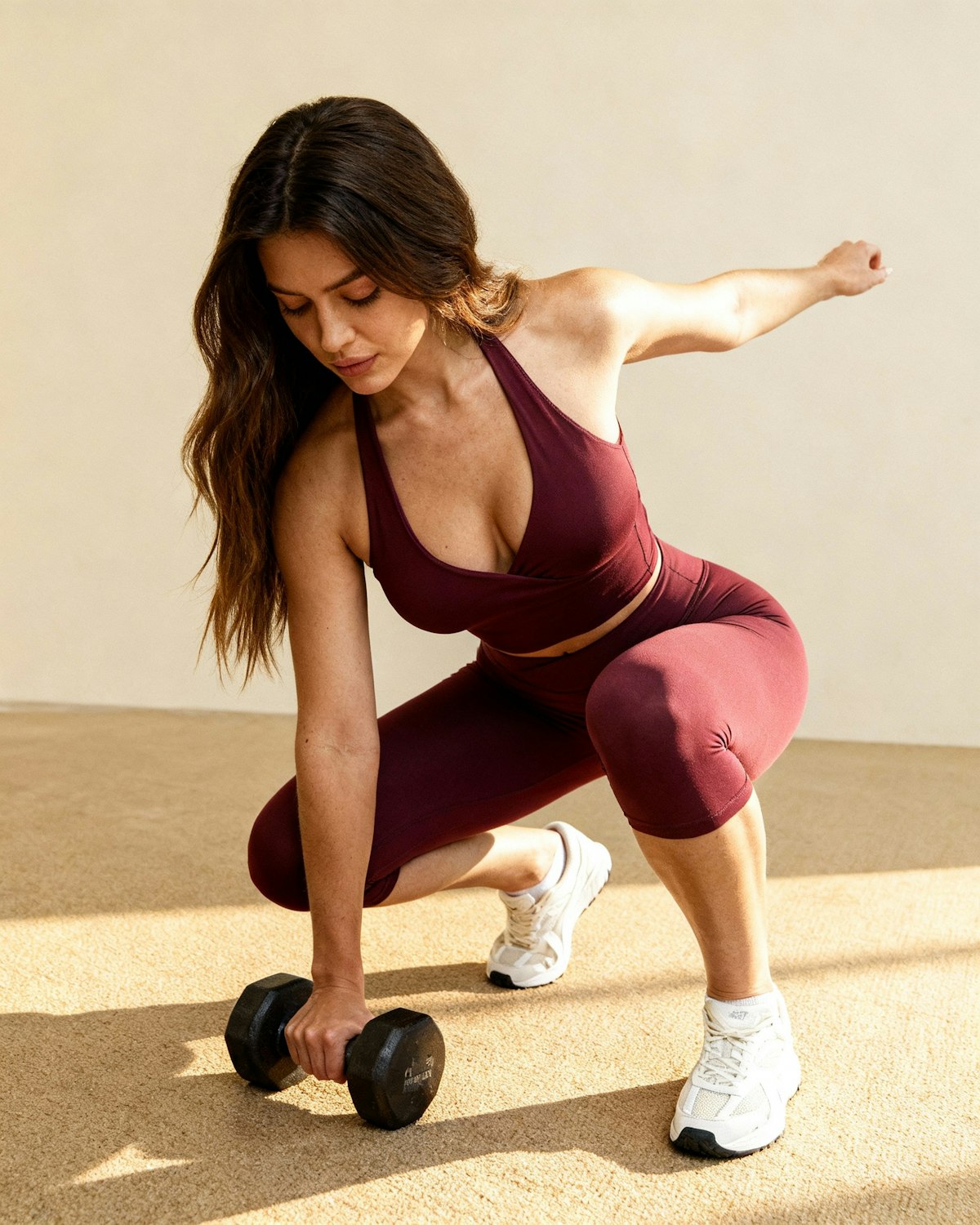
You do not need a gym, special kit or a particular age to start building strength. A sturdy chair, a wall and a couple of short sessions a week are enough to begin, and the same basic approach applies whether you are 25 or 85.
How much strength training do adults need?
The World Health Organization's 2020 guidelines advise adults to do muscle-strengthening activities "at moderate or greater intensity that involve all major muscle groups on 2 or more days a week". The guidelines cover people with chronic conditions and disabilities too, who are encouraged to be active according to their abilities. Adults aged 65 and over are also advised to do varied activity that emphasises balance and strength on 3 or more days a week, to help them stay capable in daily life and prevent falls.
The CDC sets the same 2-day minimum and names the major muscle groups: legs, hips, back, abdomen, chest, shoulders and arms. This comes on top of aerobic activity; the NHS says strength work is needed "as well as your 150 minutes of aerobic activity". How the two fit together is covered in how much exercise do you need.
What are the benefits of strength training?
- Lower risk of disease. A 2022 review of 16 cohort studies linked muscle-strengthening activities with a 10–17% lower risk of early death, heart disease, cancer overall and diabetes. The largest reduction came at roughly 30–60 minutes a week, and the benefit of doing much more was unclear. These were observational studies, so they show a link rather than proof of cause.
- Stronger muscles in later life. A Cochrane review of 121 trials with 6,700 older adults found that progressive strength training had a large effect on muscle strength and a moderate to large effect on getting up from a chair. Serious adverse events were rare.
- More muscle. A 2011 analysis of 49 studies with 1,328 people aged 50 to 83 found an average gain of 1.1 kg of lean body mass, after programmes lasting about 20 weeks on average.
- Fewer falls. A Cochrane review of 108 trials with 23,407 older people found exercise reduced the rate of falls by 23%, and programmes combining balance exercises with resistance exercises probably reduced it by 34%.
- Stronger bones. The National Institute of Arthritis and Musculoskeletal and Skin Diseases (NIAMS) explains that resistance exercises put stress on bones, "so they can make bones stronger as well".
What counts as strength training?
Anything that makes your muscles work hard against resistance. The CDC and the NHS both count lifting weights, resistance bands, bodyweight exercises, heavy gardening and some yoga. In practice, that looks like this:
| Type | Examples | Why people choose it |
|---|---|---|
| Body weight | Standing up from a chair, squats, press-ups, sit-ups | No equipment, easy to start at home |
| Resistance bands | Rows, presses and curls with an elastic band | Cheap, portable, and bands come in different strengths |
| Weights | Dumbbells, kettlebells, gym machines | Easy to add small amounts as you get stronger |
| Everyday tasks | Heavy gardening such as digging and shovelling, carrying heavy shopping, lifting and carrying children | Fits into the day you already have |
| Mind and body | Yoga, pilates, tai chi | Builds strength alongside balance and flexibility |
Effort is what makes it count. The CDC says to keep going "to the point where it's hard to do another repetition without help", and the NHS describes working until you need a short rest before repeating the activity.
How do you start strength training as a beginner?
The National Institute on Aging's advice on MedlinePlus applies at any age: if you have not been active, you can start slowly and work up to your goal.
- Check whether you need medical advice first (see the list further down).
- Choose four or five simple moves that between them work your legs, hips, back, abdomen, chest, shoulders and arms. Sit-to-stand, wall press-ups, calf raises and a resistance band row make a good starting set.
- Learn each move with your body weight before adding a band or weights. The NHS home strength exercises advise moving only as far as is comfortable, and say of sit-to-stand that "the slower the repetitions, the better".
- Do one set of each. The CDC counts 8–12 repetitions as one set and says to do at least one, with two or three sets bringing more benefit. If 8 is too many at first, do what you can with good form and build up.
- Train twice a week, with the sessions spread out, for example Monday and Thursday.
- Write down what you did, so next time you know whether to repeat it or make it a little harder.
A first week could look like this:
| Day | Activity | What it involves |
|---|---|---|
| Monday | Strength session | Sit-to-stand, wall press-ups, band rows and calf raises: 1 set of 5–10 slow repetitions each |
| Tuesday | Walk | A brisk walk |
| Wednesday | Rest or stretch | Gentle stretching for the muscles you worked |
| Thursday | Strength session | The same four moves, adding a second set of any that felt manageable |
| Friday | Walk | A brisk walk |
| Saturday | Active day | Gardening, carrying shopping or playing with children |
| Sunday | Rest | Notice how your muscles feel |
For a routine matched to your equipment and level, the workout plan builder puts one together, and the stretching routine builder can fill your rest days.
How do you make strength training harder over time?
Once you can do 12 controlled repetitions without much effort, the exercise no longer reaches the CDC's "hard to do another repetition" point, so it is time to progress. Change one thing at a time:
- add a second or third set
- use a stronger band or a slightly heavier weight
- move to a harder version, such as from wall press-ups to press-ups against a kitchen counter
- slow each repetition down
Go gradually. MedlinePlus lists using a muscle "too much, too soon" as a cause of muscle pain and advises increasing workouts gradually. Food matters too: see how much protein you need, and for one of the most studied supplements used alongside training, what research shows about creatine.
How can you strength train safely?
- Warm up before you start and cool down afterwards, which MedlinePlus recommends to help prevent muscle aches.
- For chair exercises, the NHS recommends a solid, stable chair without wheels or arms.
- Avoid weight lifting while you are injured or in pain, as MedlinePlus advises.
- Contact a doctor if muscle pain lasts more than 3 days or you have severe, unexplained pain.
- Talk to your doctor if you get chest pain or dizziness during activity. For sudden chest pain that does not go away, or pain that spreads to your arm, neck, jaw or back, the NHS advises calling 999 (or your local emergency number).
When should you check with a doctor before starting?
Most people can start gently, but get advice first if any of these apply to you:
- A heart condition. The NHLBI advises anyone with a heart problem or a chronic disease, such as heart disease, diabetes or high blood pressure, to ask their doctor what types of physical activity are safe for them.
- High blood pressure, particularly if it is not yet under control. The same NHLBI advice applies.
- Recent surgery. Lifting limits depend on the operation. After abdominal surgery, for example, one NHS hospital trust advises not lifting anything heavy for at least six weeks. Follow the timeline your own surgical team gives you.
- Osteoporosis or low bone density. NIAMS advises talking to a health care provider before starting an exercise programme, so they can help you choose activities that are safe and good for your bones.
- Pregnancy. The NHS says exercise is safe in pregnancy and suggests 2 sessions of muscle-strengthening exercise a week, but does not recommend starting a new vigorous activity. Your midwife can tell you which activities are safe for you.
- A long break from exercise, or other medical conditions or concerns. The NHS guidance for older adults advises speaking to a GP first.
To see how strength work fits alongside walking and cardio, read how much exercise you need, or let the workout plan builder set out your first plan. For more on staying active at every stage of life, see the full guide to movement.