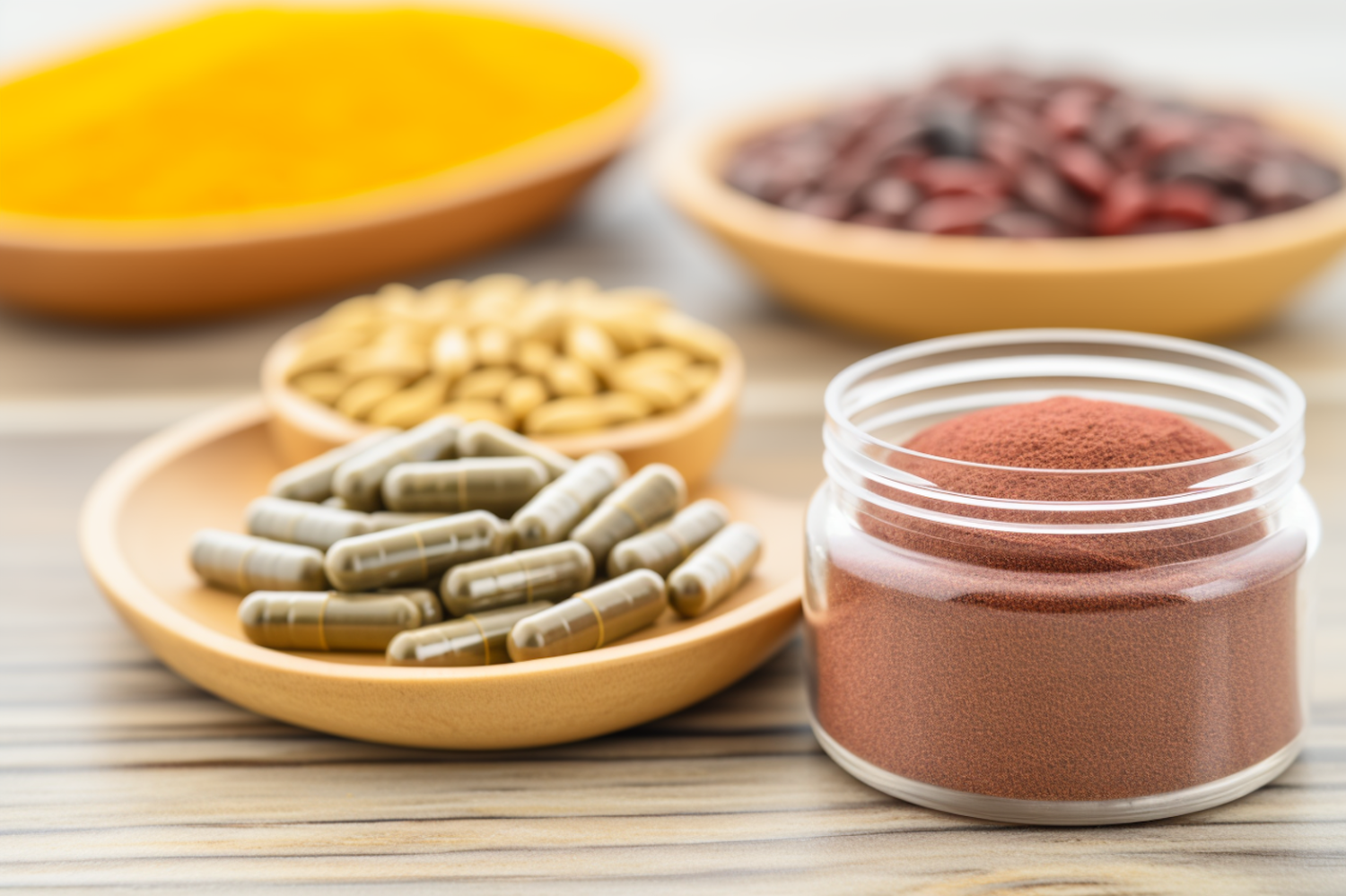
If you have seen creatine on a gym shelf and wondered whether it is only for bodybuilders, the answer is no. It is one of the most popular sports supplements, and researchers are now testing it well beyond muscle. This guide sets out what the evidence supports, where it is still thin, and who should talk to a doctor first. It does not suggest an amount to take. That is a conversation for your doctor or a registered dietitian.
What is creatine and where does it come from?
Creatine is a compound your muscles use to supply energy during short, hard efforts. According to the International Society of Sports Nutrition (ISSN) position stand on creatine, the body makes it mainly in the liver and kidneys from two amino acids, arginine and glycine, and about half of the daily need comes from food. Around 95% of the body's creatine is stored in skeletal muscle.
The main food sources are red meat and seafood. Because creatine comes mostly from animal foods, the same paper notes that vegetarians have been reported to have lower creatine stores in their muscles. If you eat a plant-based diet, vegetarian and vegan meal planning covers the nutrients worth watching.
How strong is the evidence for each benefit?
| Area | What studies show | Strength of evidence |
|---|---|---|
| Strength and high-intensity exercise | Greater gains in high-intensity exercise capacity and lean mass during training | Strong |
| Older adults and muscle | More lean mass and strength when combined with resistance training | Moderate, depends on exercise |
| Bone density | No significant effect on whole-body bone density in a 2025 review | Unclear |
| Memory and thinking | Small improvements in some measures, mainly in older adults | Early and mixed |
| Parkinson's disease | No benefit in a large, long trial | Not supported |
Does creatine help with strength and exercise?
This is where the evidence is strongest. The ISSN position stand calls creatine monohydrate the most effective nutritional supplement currently available to athletes for increasing high-intensity exercise capacity and lean body mass during training. Its summary explains that supplements raise the amount of creatine stored in muscle, which may account for "improvements in high intensity exercise performance leading to greater training adaptations."
The key word is training. Creatine helps you do a little more work in hard sessions, and the training produces the change. A 2021 review of common questions about creatine, published in the same society's journal, adds that many kinds of sport, not only strength and power events, may benefit. If you are building a routine from scratch, how much exercise you actually need is a better starting point than any supplement.
Can creatine help older adults keep muscle?
Keeping muscle and strength in later life is one of the most active areas of creatine research. A 2017 meta-analysis of 22 trials with 721 older adults found that people who took creatine while doing resistance training gained more lean tissue, about 1.4 kg on average, and more upper and lower body strength than people who did the same training with a placebo.
The exercise part matters. The 2021 review concludes that creatine without exercise "may be ineffective to prevent sarcopenia", the medical term for age-related loss of muscle. A 2025 meta-analysis of 20 trials in older adults found gains in strength with creatine plus training, but no significant effect on whole-body bone density, a question its authors say needs more study.
Does creatine help memory and thinking?
The brain uses a lot of energy, and creatine plays a part in how it produces that energy, which is why researchers have started testing it for memory and thinking. The results so far are interesting but early:
- A 2023 meta-analysis of eight trials in healthy people found a small improvement in memory overall. The benefit was clearest in adults aged 66–76, with no meaningful effect in younger people, and the results varied a lot between studies.
- A 2024 meta-analysis of 16 trials found improvements in memory, attention time and processing speed, but no change in overall cognitive function or executive function. Its authors rated the certainty of evidence as moderate for memory and low for the other measures, and called for larger trials.
- Early hopes for brain diseases have not always held up. A large trial in people with early Parkinson's disease was stopped early after finding that creatine "did not improve clinical outcomes" compared with a placebo.
Put together, creatine for the brain is a reasonable research question, not an established benefit. If memory or concentration problems are new or getting worse, that is a reason to see a doctor rather than to try a supplement.
Is creatine bad for your kidneys?
For healthy people, the research is reassuring. The ISSN position stand concludes that short and long-term use, in studies lasting up to five years, is "safe and well-tolerated in healthy individuals". A 2025 meta-analysis of 21 studies on kidney function found that creatine caused a modest rise in blood creatinine but no significant change in glomerular filtration rate (GFR), the main measure of how well the kidneys filter.
That creatinine rise has a practical side. Creatinine is a breakdown product of creatine and is widely used to judge kidney function, so taking creatine can push a blood result up without any real change in your kidneys. The meta-analysis authors advise clinicians to interpret raised creatinine with caution in people taking it. If you take creatine, mention it before any kidney blood test. These studies did not focus on people with existing kidney disease, so they do not show that creatine is safe for kidneys that are already damaged.
Does creatine cause water weight, cramps or hair loss?
| Common worry | What the evidence shows |
|---|---|
| Water retention | Some studies report a short-term rise in body water when people start taking it. A 2021 review of common creatine questions concludes that creatine does not always lead to water retention. |
| Fat gain | The 2021 review concludes that creatine does not increase fat mass across a variety of populations. |
| Dehydration and cramps | The same review found that research does not support the idea that creatine causes dehydration or muscle cramps. |
| "It is a steroid" | It is not. Creatine has a completely different chemical structure from anabolic steroids. |
| Hair loss | The worry traces back to a single study in college-aged rugby players that found a rise in DHT, a hormone linked to male pattern baldness, but did not measure hair. A 2025 randomized trial that did measure hair found no difference in DHT, hair density, follicle counts or hair thickness after 12 weeks. |
The hair trial was short and included only 38 men who finished it, so it does not settle every question. One more caveat worth knowing: the ISSN position stand was funded by the Council for Responsible Nutrition, and several of its authors disclose ties to the supplement industry.
Who should talk to a doctor before taking creatine?
In the US, creatine is sold as a dietary supplement, so it is not reviewed by the FDA for safety and effectiveness before it goes on sale (see how supplements are actually regulated). The National Center for Complementary and Integrative Health also notes that many supplements have not been tested in pregnant women, nursing mothers or children, and that supplements may interact with medications or pose risks if you have certain medical problems. Check with a doctor or pharmacist first if any of these apply:
- You have kidney disease or have been told your kidney function is reduced. The ISSN position stand itself mentions the advice that people with existing kidney disease consult a physician first.
- You are pregnant or breastfeeding. Pregnancy is one of the areas researchers are exploring, but that is not the same as knowing creatine is safe at this time.
- You are under 18. Evidence in children and teenagers is limited. The ISSN considers creatine acceptable for young athletes only with conditions, such as supervision, a well-balanced diet and serious training.
- You take regular medication or live with a long-term health condition. Which herbs interact with medication explains why a pharmacist check matters for supplements in general.
- You have a blood test coming up, because creatine can raise creatinine results.
If you notice side effects after starting any supplement, stop taking it and contact your doctor.
For the food side of building and keeping muscle, see how much protein you need a day. The full guide to herbal remedies and supplements covers how to weigh the evidence behind any supplement before you buy it.