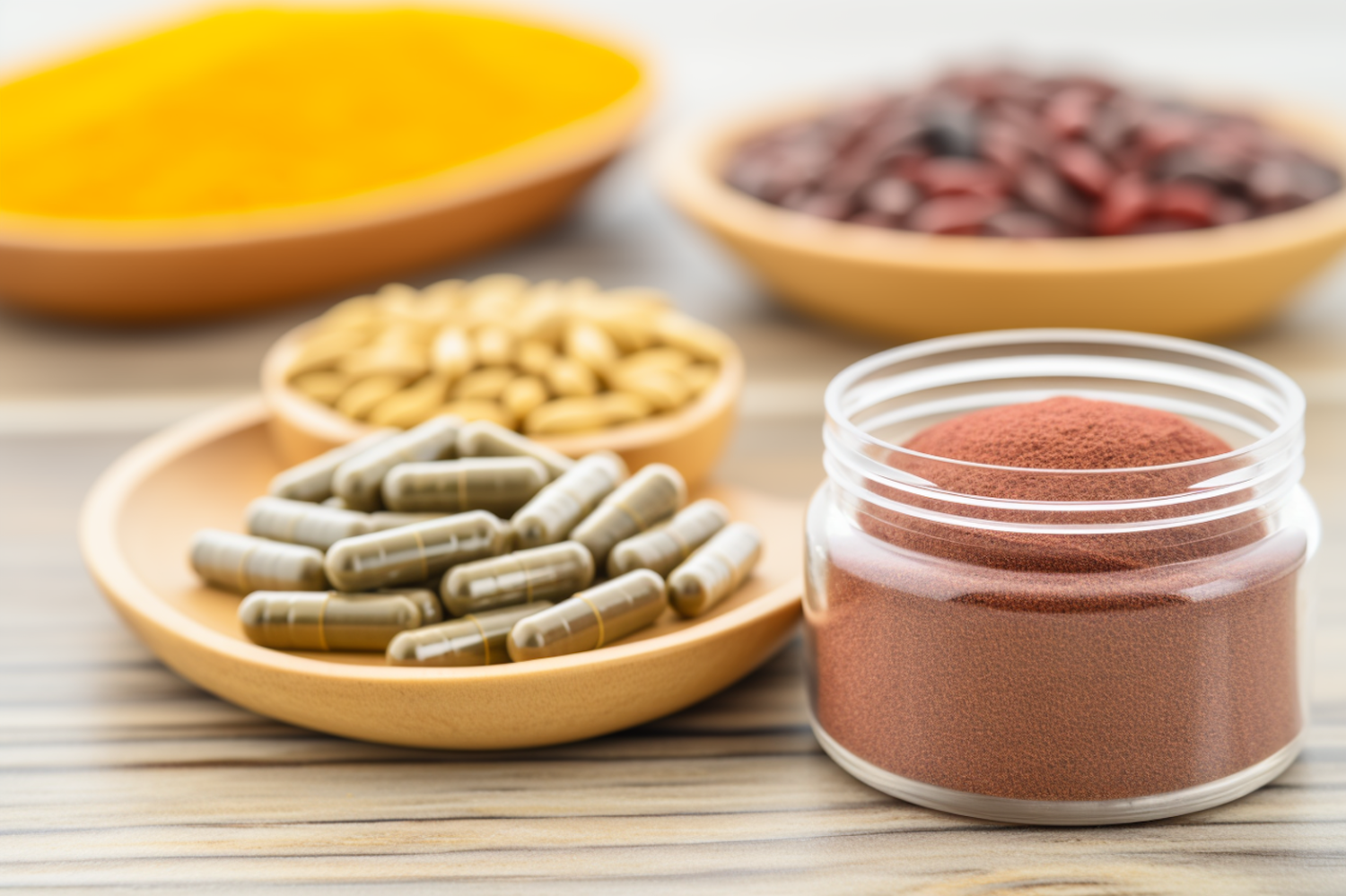
Goji berries are a genuinely nutrient dense dried fruit: 100 g supplies roughly 13 g of fibre, 14 g of protein and 48 mg of vitamin C, according to USDA data. The bigger marketing claims, about eyesight, immunity and longevity, are a different matter. They rest on human trials that are few, small and short.
What are goji berries, and why are they sold as a superfood?
Goji berries, also called wolfberries, are the fruit of Lycium barbarum, a shrub grown mainly in northern China and used in Chinese cooking and traditional medicine for centuries. In Western shops they arrive dried, tasting somewhere between a cranberry and a tomato, or processed into juice, powder or capsules.
Superfood is a marketing category, not a scientific one. The label rests on antioxidant compounds measured in a laboratory and on long traditional use, rather than on outcomes in people. Supplement versions carry the boldest wording, partly because of the way supplements are regulated: a product does not have to be shown effective before it goes on sale.
What is the nutrition profile of dried goji berries?
The figures below come from the USDA FoodData Central record for dried goji berries (SR Legacy entry 173032), per 100 g. A more realistic serving is a small handful of about 28 g, so a bit over a quarter of each number.
| Nutrient | Per 100 g |
|---|---|
| Energy | 349 kcal |
| Protein | 14.3 g |
| Total fat | 0.39 g |
| Carbohydrate | 77.1 g |
| Total sugars | 45.6 g |
| Fibre | 13.0 g |
| Calcium | 190 mg |
| Iron | 6.8 mg |
| Sodium | 298 mg |
| Vitamin C | 48.4 mg |
| Vitamin A | 26,822 IU |
Two numbers deserve a second look. The 13 g of fibre is a real strength, and fibre is one of the few dietary levers with consistent evidence behind it. The 45.6 g of sugar is the other side of the ledger: goji is dried fruit, and it behaves like it.
What does the research on goji berries actually support?
Less than the packaging implies. A systematic review of Lycium barbarum polysaccharides, the most studied component of the berry, found only two randomised controlled trials among 20 published papers. The rest were laboratory and animal work. The authors concluded that "there is an evident lack of well-designed randomized control trials to evaluate the effect of LBP in humans", and that where trials do exist, "the respective sample size of the studies is insufficient for the results to have significant impact in clinical management".
The same review flags a problem running through the field: "One major limitation of current research is a lack of standardization and quality control for the LBP used." In plain terms, the extract tested in one study may bear little resemblance to the extract in the next, or to the berries in your cupboard. Before trusting any headline about a single food, ask how many people were studied, for how long, and who funded the work.
What can be said confidently is duller than the marketing: dried goji berries are a useful source of fibre, vitamin C, iron and carotenoids, and eating them in place of a sweeter snack adds those things to your day.
Which goji berry claims does the evidence not back up?
- Eye health. Most research on goji and the retina has been done in cells and animals. Human trials are few and small, and none establish that goji treats or prevents an eye condition.
- Immune boosting. Laboratory effects on immune cells are a long way from fewer infections in real people.
- Antioxidant capacity in your body. A high antioxidant score in a test tube says little about what happens after digestion and absorption.
- Energy, weight loss and longevity. No single food delivers these, and the goji trials published so far have not tested them.
None of this makes goji berries a bad choice. It makes them a fruit rather than a treatment. If you have a diagnosed condition, that is a conversation for your clinician.
How do you eat goji berries day to day?
Treat them roughly the way you would treat raisins.
- Scatter them dry over porridge, yoghurt, granola or a grain salad.
- Rehydrate them in hot water for about 10 minutes, then stir into soups, congee, rice or a slow braise.
- Steep a spoonful in hot water as a mild tea, on its own or with chrysanthemum.
- Blend a spoonful into a smoothie, or fold them into flapjacks and trail mix.
Plain dried berries are usually far cheaper per serving than juice, powder or capsules, and they keep the fibre that juicing strips out.
Who should be cautious with goji berries?
Anyone taking warfarin or another anticoagulant should speak to their prescriber before adding goji in any concentrated form. Published case reports describe people whose INR climbed afterwards. In one, a 65-year-old man's INR rose from 2.46 to 3.84 and he developed visible blood in his urine after drinking goji wine; the authors of that case report concluded that "Gouqizi can enhance the anticoagulant effect of warfarin and may consequently cause bleeding".
The likely mechanism is broader than warfarin alone. In a case report of a woman who developed a dangerous heart rhythm disturbance while taking the antiarrhythmic drug flecainide and drinking goji tea, the authors noted that goji berries "have the potential to cause strong inhibition (over 75%) of most of the major CYP450 enzymes", the liver enzymes that clear a long list of prescription medicines. Our guide to herb and drug interactions covers how to raise this with a pharmacist.
People who are pregnant or breastfeeding should also check first, since safety data is thin. Note that the published case reports involve juices, wines and strong daily teas rather than a spoonful of berries on porridge.
So are goji berries worth eating?
Yes, if you like the taste and buy them as fruit rather than as medicine. What they will not do is what the label hints at. Judge them against other dried fruit, not against a pharmacy, and ask a pharmacist first if you take regular medication. For the wider picture of where botanicals earn their place, start with our guide to herbal remedies.