
Whole-food nutrition is less complicated than the diet market needs it to be. The federal guidance amounts to one instruction: build your meals from whole, nutrient-dense foods, meaning vegetables, fruits, whole grains, protein, dairy and healthy fats. Almost everything else, the elimination protocols and the ingredient panic, is noise layered on top of a recommendation that fits in a sentence and forbids nothing outright.
What follows is what the guidelines actually say, the handful of numbers worth knowing, where the population genuinely falls short, and how to build a plate without keeping a spreadsheet.
What do the dietary guidelines actually recommend?
The Dietary Guidelines for Americans describe it in a single line: the guidance "prioritizes diets built on whole, nutrient-dense foods, including protein, dairy, vegetables, fruits, healthy fats, and whole grains."
Read that carefully for what it does not do. It names no banned ingredient, prescribes no macronutrient ratio, and sets no eating window. It describes a pattern. That matters, because a pattern survives a bad week in a way that a rule set does not.
Where do most people actually fall short?
Overwhelmingly on plants. According to CDC surveillance data, "12.3% of adults met fruit intake recommendations" and "10.0% met vegetable intake recommendations".
Roughly one adult in eight hits the fruit target and one in ten hits the vegetable target. Set against that, the energy spent debating seed oils or optimal meal timing is badly allocated. If you change one thing, more vegetables is the change with the most population-level room in it.
Which numbers are actually worth knowing?
Very few, and these are them.
| What | The target | Source |
|---|---|---|
| Added sugars | Less than 10 percent of total calories per day | FDA |
| Sodium | Under 2,300 mg a day for adults | FDA |
| Dietary fibre | Daily Value of 28 g | FDA |
Two of those come with a gap attached. On sodium, the FDA notes that "Americans eat on average about 3,400 mg of sodium per day", well above the 2,300 mg target, and most of it arrives in packaged and restaurant food rather than from the salt shaker. On fibre, the FDA lists it among the nutrients that "Americans generally do not get the recommended amount of".
Are whole grains actually better than refined ones?
The association is reasonably well supported. NHLBI-funded research following an adult cohort over 18 years found that "greater whole grain consumption is associated with a reduced risk of cardiovascular disease".
Note the word associated. This is observational work, so it establishes a consistent relationship rather than proving cause. That is still enough to make swapping some refined grains for whole ones a sensible default, particularly since it also moves you toward the fibre target rather than away from it.
How bad are ultra-processed foods?
This is where honest reporting matters, because the topic has outrun its evidence. The USDA's systematic review for the Dietary Guidelines Advisory Committee concluded that "Dietary patterns consumed by adults and older adults with higher amounts of foods classified as ultra-processed food are associated with greater adiposity (fat mass, waist circumference, BMI) and risk of obesity and/or overweight."
And then, crucially, the same document grades its own confidence: "This conclusion statement is based on evidence grade as limited."
So there is a signal, it points where you would expect, and the reviewers themselves call the evidence limited. What that supports is a reasonable nudge toward cooking more of your food from recognisable ingredients. What it does not support is the claim that these foods cause disease, or the moral framing that has attached itself to the category. Anyone telling you the science is settled here has not read the review.
How do you build a plate without counting anything?
Use proportions rather than numbers.
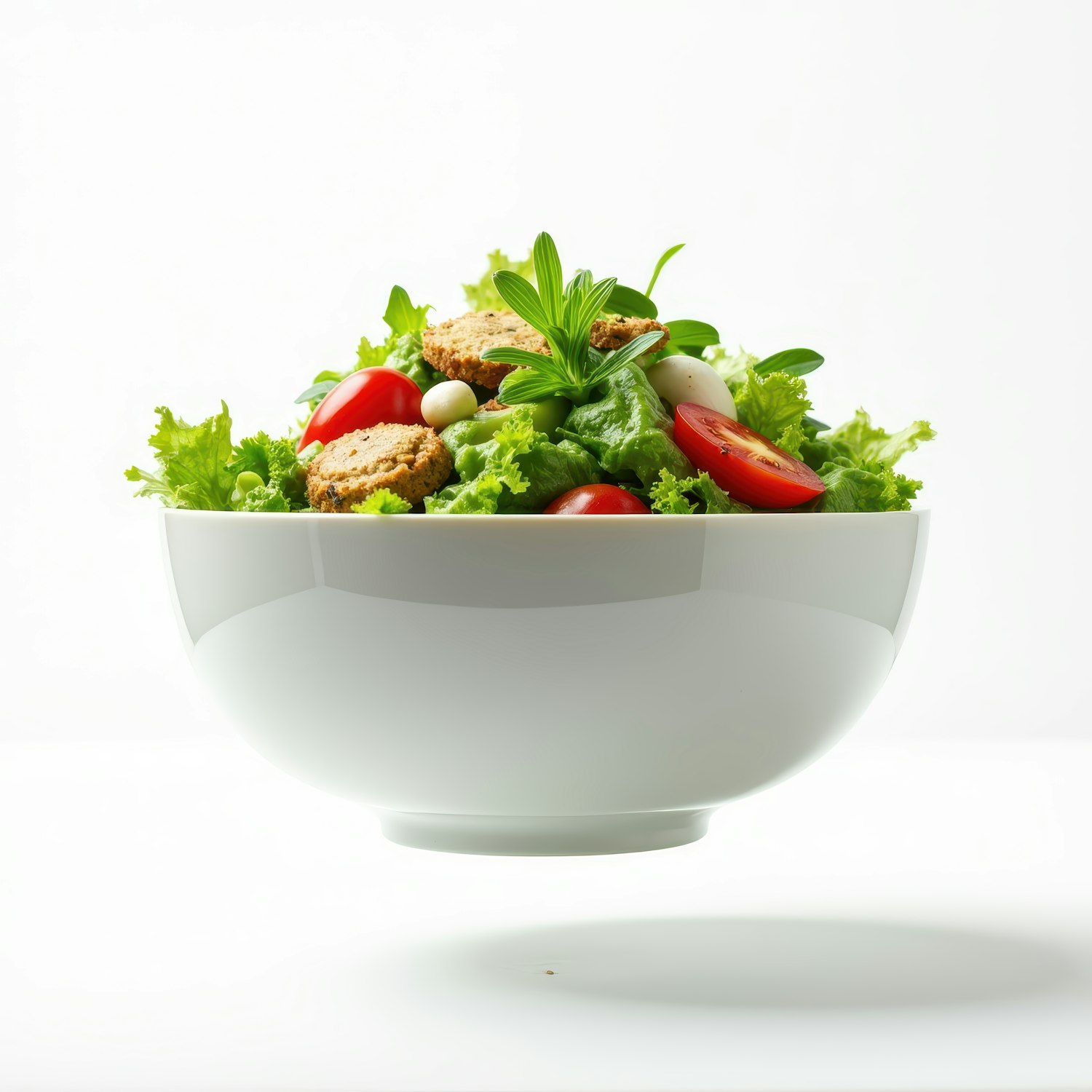
- Fill half the plate with vegetables or fruit. This is the shortfall for roughly nine adults in ten, so it is where the return is highest.
- Add a protein. The guidelines name protein and dairy as part of the pattern without prescribing a source.
- Make the starch a whole grain where you reasonably can. This moves fibre and cardiovascular risk in the same direction at once.
- Include a fat. Healthy fats are named in the guidance, not something to minimise by default.
- Check the label on packaged food for sodium and added sugars. These are the two numbers most likely to be higher than you would guess, especially in savoury products.
- Repeat the meals that worked. A short rotation you actually cook beats an ambitious plan you abandon in week two.
Our guides to building a balanced plate and eating with the seasons go further into the practical side.
Do you need to eat organic, or avoid gluten, or cut out dairy?
Not according to the guidance. Dairy is named as part of the recommended pattern rather than as something to eliminate, and nothing in the core recommendation requires organic produce or excludes gluten for people who do not have a medical reason to avoid it. Coeliac disease and diagnosed food allergies are genuine medical conditions requiring genuine dietary changes, and those are matters for a clinician rather than for a wellness article.
The broader point: elimination is expensive in effort and attention, and the population-level evidence says most people would benefit far more from adding vegetables than from removing categories.
What about supplements?
The guidance is built around foods, not pills, and food-first is the sensible default. Supplements are also regulated differently from medicines, which is worth understanding before buying any: our guide to herbal remedies and supplements covers how that regulation actually works.
What does a realistic first month look like?
| Week | Focus | What it looks like |
|---|---|---|
| 1 | Add, do not remove | A vegetable at one more meal a day |
| 2 | Swap the grain | Whole grain in the one or two places you eat it most |
| 3 | Read two labels | Check sodium and added sugars on the packaged foods you buy weekly |
| 4 | Build the rotation | Settle on five meals you can cook without thinking |
Nothing here is a diet, and none of it has an end date. The point of a pattern is that you can keep it.
