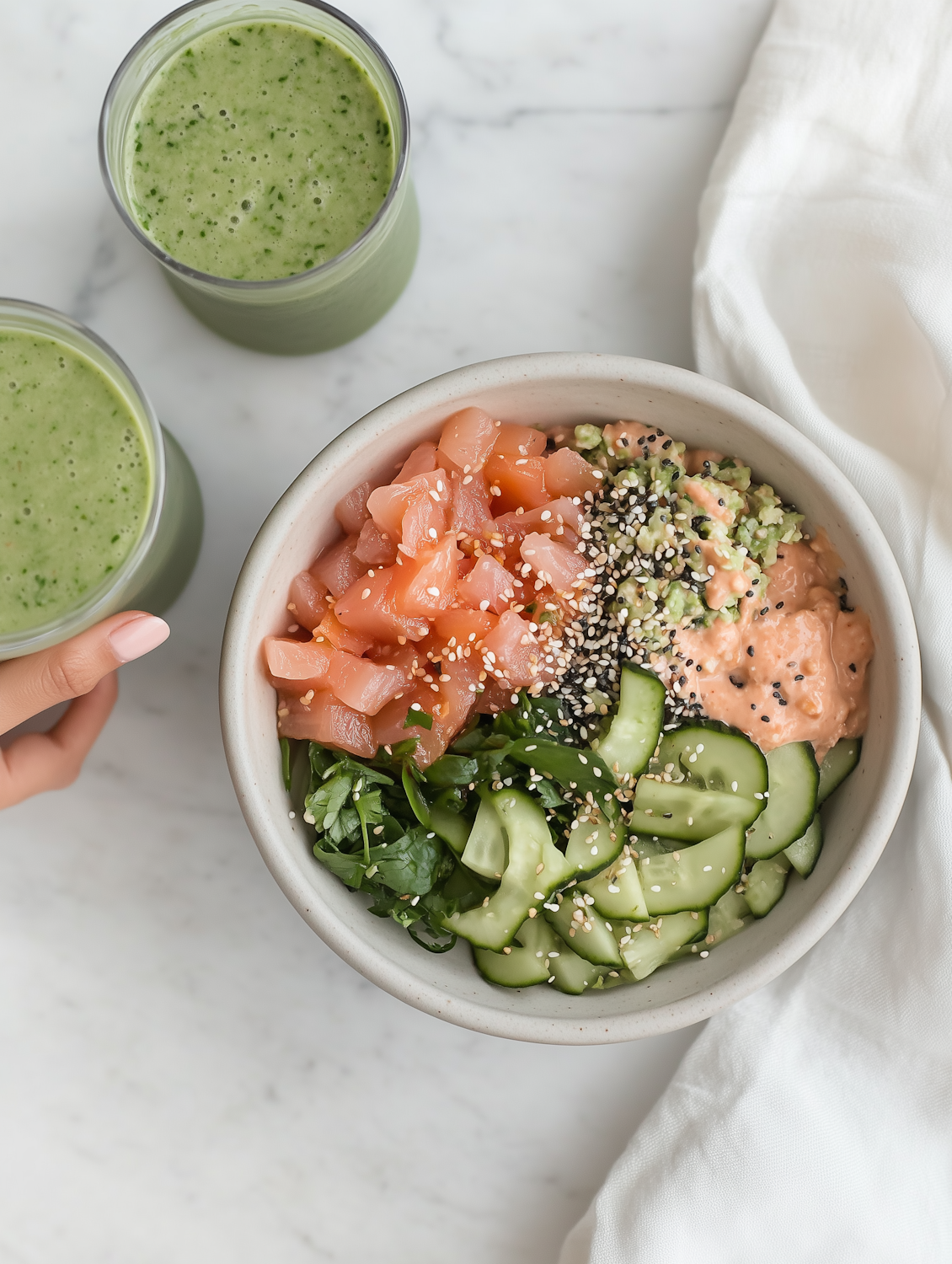
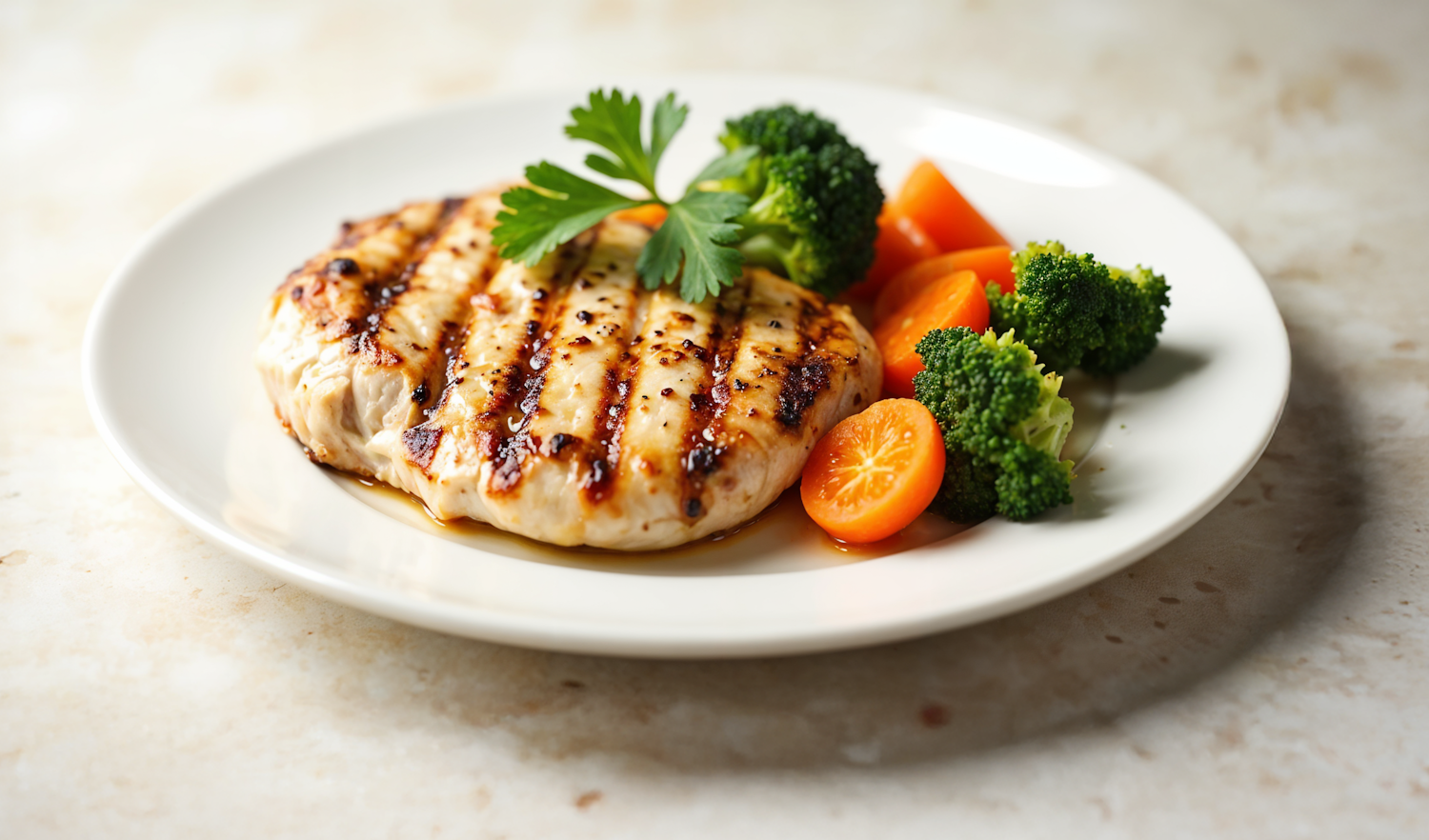
Eating well matters because the food you eat most days shapes your energy, your weight, your blood pressure and blood sugar, and your long-term risk of the diseases that shorten life. A few of those benefits show up within a week. The largest ones build quietly over decades.
The five benefits with the best evidence behind them:
- Steadier energy. Meals built on vegetables, whole grains and protein digest more slowly than refined snacks, so the mid-afternoon slump tends to be shallower.
- Easier weight regulation. Higher-fibre, higher-protein meals are more filling per calorie, which makes portion control something you feel rather than something you police.
- Lower risk of major chronic disease. The CDC states that a healthy diet "supports healthy immune function and helps to prevent obesity, type 2 diabetes, cardiovascular diseases, and some cancers".
- Mood support. In a 12-week randomised trial of 67 adults with major depression, 32.3% of those given dietary support reached remission, against 8.0% of the control group.
- More healthy years. In a 12-year cohort of nearly 74,000 US adults, improving diet quality was associated with an 8% to 17% lower risk of death from any cause.
What does healthy eating do for your body?
The first thing most people notice is digestion. Fibre is the nutrient nearly everyone falls short on, and it is the one your gut bacteria depend on, which is why a week of more beans, oats and vegetables often changes how your stomach feels before it changes anything on a scale. Our guide to fibre and gut health covers the mechanism in detail.
Weight is the second. A healthy pattern is not automatically a lower-calorie one, but foods with more water, fibre and protein per bite make it easier to stop eating without willpower doing the work. That matters more than any single food swap.
Disease risk is the third, and it is the biggest of the three even though you cannot feel it. The World Health Organization is blunt about the stakes: unhealthy diets are a major risk factor for disease and disability, and a healthy diet helps protect against noncommunicable diseases including diabetes, heart disease, stroke and cancer. If you want a starting framework, the anti-inflammatory plate is a practical way to build meals around that goal.
Can what you eat change how you feel?
Possibly, though this is the weakest-evidenced of the big claims and it deserves care. The clearest test so far is the SMILES trial, published in BMC Medicine in 2017: 67 adults with major depression were randomly assigned to 12 weeks of dietary support or social support, and remission (a score under 10 on the MADRS scale) was reached by 32.3% of the diet group against 8.0% of controls.
That is a striking result, but it is one small single-blind trial, not a body of evidence. Food is not a substitute for mental health treatment, and anyone struggling should speak to a clinician rather than reach for a shopping list. What the trial does support is a modest, useful claim: improving diet is unlikely to hurt your mood and may help it.
The day-to-day version is less dramatic and better established by experience than by trials. Regular meals, enough fluid and less reliance on late-night sugar tend to make concentration and irritability more manageable, partly because they also protect sleep.
What are the long-term benefits of eating well?
The long game is where healthy eating earns its reputation. In the New England Journal of Medicine analysis of the Nurses Health Study and the Health Professionals Follow-up Study, 47,994 women and 25,745 men were tracked for 12 years, and the authors reported that "improved diet quality over 12 years was consistently associated with a decreased risk of death", with a 20-percentile rise in diet score linked to 8% to 17% lower total mortality.
Read that carefully, because the wording matters. These are observational cohorts, not randomised trials. People whose diets improve also tend to move more, smoke less and see a doctor more often, and while the researchers adjusted for those factors, statistics cannot fully separate them. The honest summary is that better diets travel with longer lives, and the biological case for why is strong, but no cohort study can prove the food caused the outcome.
Where the causal evidence is firmer is in the intermediate steps: blood pressure, blood lipids and blood sugar all respond to dietary change in controlled trials, and those are the mechanisms through which the long-term association is thought to work. Salt and added sugar are the two levers with the clearest numbers attached, which is why they get their own piece on sugar and salt limits.
What does healthy eating actually mean?
It is less exotic than the internet suggests. The WHO sets out a healthy adult diet in three practical numbers: at least 400 g of fruit and vegetables a day, free sugars kept under 10% of total energy intake ("equivalent to 50 g (or about 12 level teaspoons)" for an average adult), and salt under 5 g a day. Nothing on that list is a superfood, and nothing on it is banned outright.
The gap between that and how most people eat is not sophistication, it is vegetables. CDC analysis of 2019 data found that only 12.3% of US adults met fruit recommendations and 10.0% met vegetable recommendations. Nine in ten adults are not failing at some elaborate protocol. They are failing at plants.
Why is healthy eating not a diet?
| Aspect | A diet | An eating pattern |
|---|---|---|
| Time frame | Weeks, with an end date | Indefinite, adjusted as life changes |
| Rules | Foods banned outright | Proportions shifted, nothing forbidden |
| Measure of success | Scale weight | Energy, bloods, how most meals look |
| Effect of a slip | Failure, then abandonment | One meal out of twenty-one |
The distinction is practical, not philosophical. A pattern you keep for ten years beats a stricter one you keep for ten weeks, because every benefit described above depends on repetition. That is also why seasonal, cheap and familiar foods matter more than novel ones, which is also why eating with the seasons is easier to sustain than eating by trend.
How do you start eating healthier this week?
- Add one vegetable to a meal you already cook, rather than redesigning the meal.
- Move one refined grain to a whole one: the bread, the rice or the breakfast, whichever you eat most.
- Make water the default drink and keep sweetened drinks as a deliberate choice rather than a habit.
- Put a protein source in breakfast, which is the meal most likely to be pure refined carbohydrate.
- Cook one extra meal at home each week, since home cooking is the simplest lever on both salt and added sugar.
None of that requires a new pantry. Consistency is the active ingredient, and the five steps are ordered so the first one works even if you never get to the fifth.
Two caveats worth stating plainly. If you have a diagnosed condition, are pregnant, or take medicines that interact with food, discuss significant dietary changes with a clinician before making them. And if you are chasing a specific concern rather than general health, the evidence gets narrower fast: our piece on the best foods for hair growth is a good example of how quickly a popular nutrition claim thins out under scrutiny. The wider picture lives in the full nutrition guide.