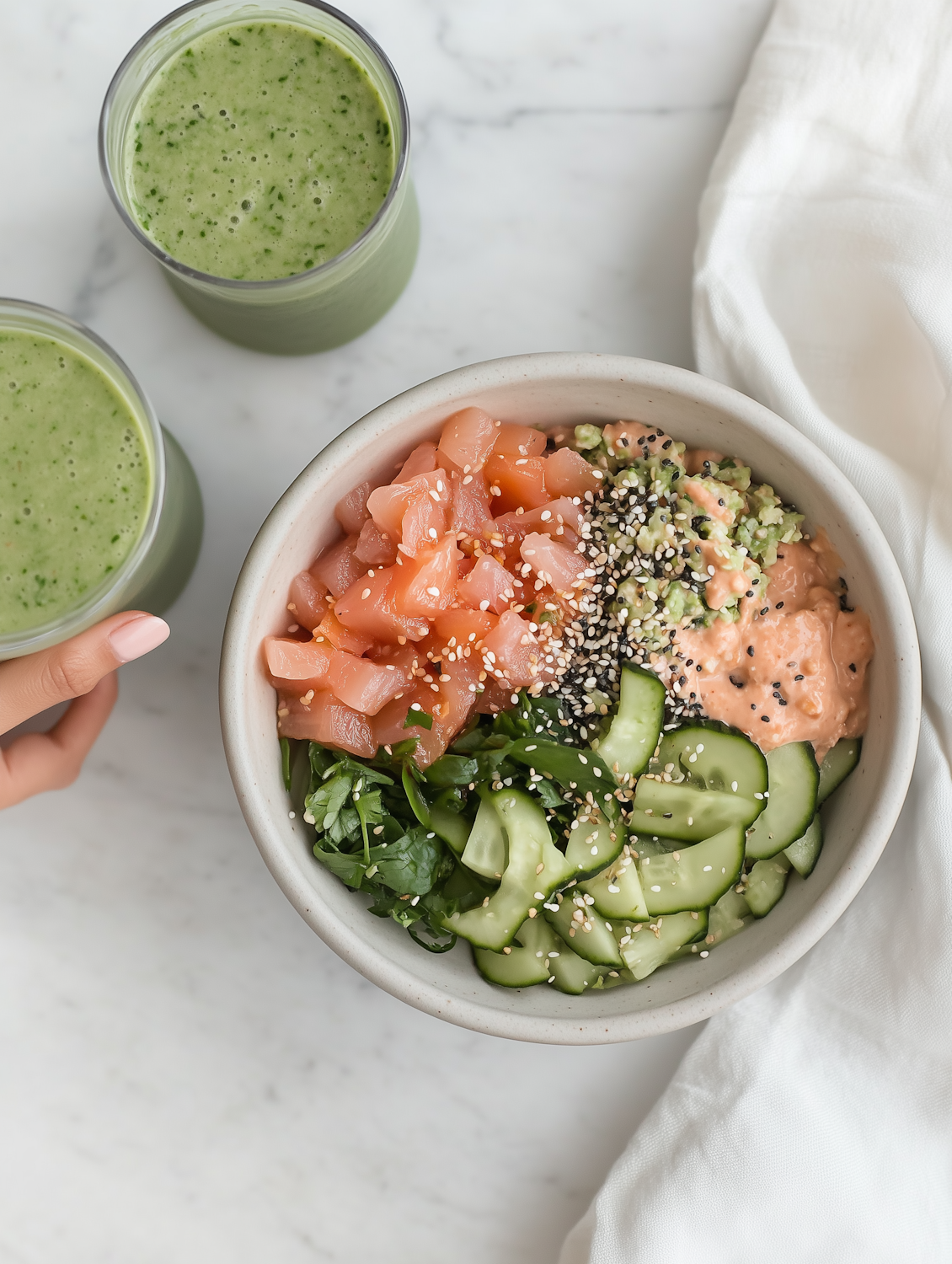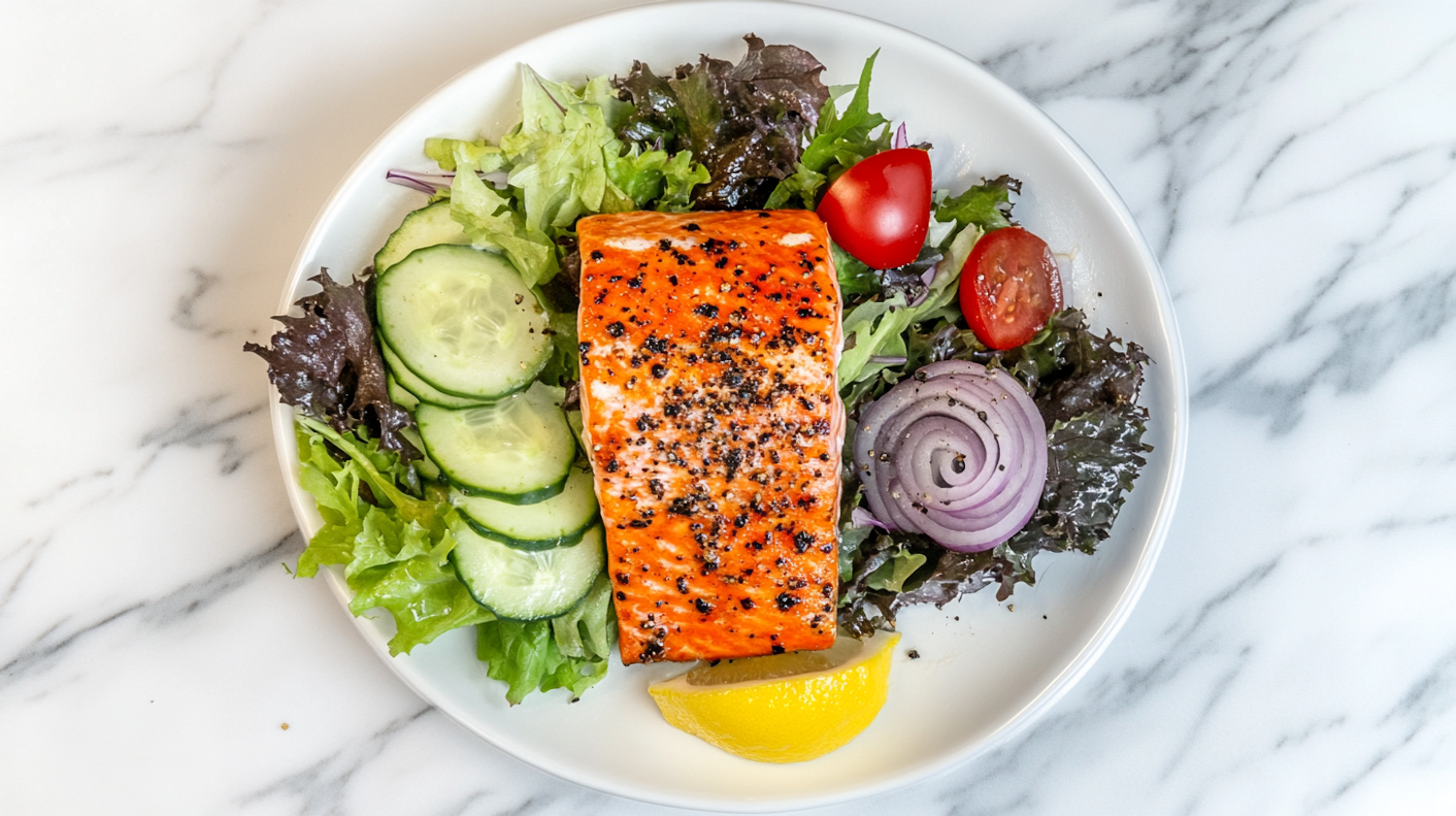
The simplest way to eat more omega-3 is to plan fish into two meals a week, one of them oily, such as salmon, sardines or mackerel. Tinned sardines on toast is quick and cheap. If you do not eat fish, the plant options are covered below.
What are the three main types of omega-3?
Three omega-3 fats matter most in food. The US National Center for Complementary and Integrative Health (NCCIH) sets out where each one comes from:
| Type | Full name | Main food sources |
|---|---|---|
| ALA | Alpha-linolenic acid | Flaxseed (linseed), chia seeds, walnuts, and rapeseed (canola) and soybean oils |
| EPA | Eicosapentaenoic acid | Seafood, especially cold-water fish such as salmon and mackerel |
| DHA | Docosahexaenoic acid | Seafood, especially cold-water fish; algal oil is a vegetarian source |
ALA is an essential fat: a 2022 review in the journal Molecules notes that it must be provided by the diet. EPA and DHA are often called long-chain omega-3s, and NCCIH says most omega-3 research has focused on them.
Which foods contain the most omega-3?
The NHS says "oily fish are the richest source of long-chain omega-3". It lists herring, pilchards, salmon, sardines, sprats, trout and mackerel as oily fish, and points out that fresh and canned tuna do not count. The figures below come from a food table published by Human Performance Resources by CHAMP, part of the US Uniformed Services University.
| Food | Serving | Omega-3 per serving |
|---|---|---|
| Herring, cooked | 3 oz (about 85g) | 773mg EPA + 935mg DHA |
| Wild Atlantic salmon, cooked | 3 oz (about 85g) | 349mg EPA + 1,200mg DHA |
| Wild rainbow trout, cooked | 3 oz (about 85g) | 398mg EPA + 442mg DHA |
| Sardines, canned in oil | 3 oz (about 85g) | 402mg EPA + 432mg DHA |
| Light tuna, canned in water | 3 oz (about 85g) | 24mg EPA + 167mg DHA |
| Chia seeds | 1 oz (about 28g) | 5,050mg ALA |
| Walnuts | 1 oz (about 14 halves) | 2,570mg ALA |
| Ground flaxseed | 1 tablespoon | 1,600mg ALA |
The plant figures look large, but they are ALA, which the body only partly turns into EPA and DHA.
How much omega-3 should you get from food?
- Fish: the NHS advises at least 2 portions of fish a week, including 1 of oily fish. A portion is around 140g, weighed after cooking for oily fish.
- Seafood in the US: NCCIH reports that the US Dietary Guidelines advise adults to eat 8 ounces (about 230g) or more of a variety of seafood a week.
- ALA: the Dietary Reference Intakes used in the US and Canada set an adequate intake of 1.6g a day for men and 1.1g a day for women, as summarised in Canadian Family Physician. Going by the table above, a tablespoon of ground flaxseed or a 28g handful of walnuts provides at least that much.
What does research show about omega-3s and heart health?
The NHS says long-chain omega-3 "can help to prevent heart disease". Trials that test omega-3 capsules give a more mixed picture:
- Cochrane review, 2020. A Cochrane review of 86 trials and 162,796 people found that more EPA and DHA has little or no effect on deaths and cardiovascular events (high-certainty evidence). It may slightly reduce coronary heart disease deaths and events (low-certainty evidence): about 334 people would need to increase their intake to prevent one coronary death. EPA and DHA also lowered triglycerides by about 15%. Most trials used capsules, so there was little evidence on eating fish itself.
- VITAL trial. In VITAL, 25,871 older US adults took fish oil capsules or a placebo for a median of 5.3 years. Major cardiovascular events (heart attack, stroke or cardiovascular death) were not significantly reduced: 386 in the omega-3 group against 419 on placebo. There were fewer heart attacks (145 against 200), but this was a secondary result, and the authors called a possible benefit in people who ate little fish "hypothesis-generating".
NCCIH notes that for some conditions the evidence for seafood is stronger than for supplements, perhaps because seafood contains other nutrients, may replace less healthy foods, and tends to be eaten by people with healthier lifestyles. If a blood test showed raised triglycerides, cholesterol numbers explained covers what your blood fat results mean.
Can you get enough omega-3 on a plant-based diet?
Meeting the ALA target from plants is straightforward. The NHS guide to vegan diets lists linseed (flaxseed) oil, rapeseed oil, chia seeds, shelled hemp seeds and walnuts as sources. The catch is conversion. The 2022 Molecules review states that "the conversion of ALA to EPA and DHA is limited": eating more ALA raises EPA levels but has no effect on DHA, and conversion is more efficient in premenopausal women than in men.
Algal oil, made from algae, is a vegetarian source of DHA, and some products also contain EPA, according to NCCIH. If you are vegan and pregnant or planning a pregnancy, ask your doctor, midwife or a dietitian about DHA. For balanced plant-based meals, see our guide to vegetarian and vegan meal planning.
Which fish should you limit, especially in pregnancy?
Some fish carry pollutants or mercury, so the NHS advises:
- No more than 2 portions of oily fish a week for girls, women who are planning a pregnancy or may have a child one day, and pregnant or breastfeeding women, because pollutants can build up in the body.
- No shark, swordfish or marlin if you are pregnant or trying to get pregnant, or for children under 16, because of their mercury content. Other adults should have no more than 1 portion a week.
- No more than 4 medium cans of tuna or 2 tuna steaks a week if you are pregnant or trying for a baby.
In the US, the FDA advises people who are or might become pregnant, or who are breastfeeding, to eat 2–3 servings (8–12 ounces) a week from its lower-mercury "Best Choices" list, which includes salmon, sardines, cod and canned light tuna, and to avoid king mackerel, marlin, orange roughy, shark, swordfish, Gulf of Mexico tilefish and bigeye tuna. The NHS also says not to take cod liver oil or supplements containing vitamin A (retinol) in pregnancy, because too much vitamin A can harm your baby's development.
Who should be careful with omega-3 supplements?
NCCIH says side effects of omega-3 supplements are usually mild, such as an unpleasant taste, bad breath, headache, heartburn, nausea or diarrhoea. Even so, talk to a doctor or pharmacist before taking one if any of these apply:
- You take a blood thinner or antiplatelet medicine. A 2024 analysis of trials including 120,643 people found no overall rise in bleeding with omega-3s, but high-dose purified EPA was linked to a small increase (about 0.6% in absolute terms). The analysis was funded by a maker of a purified EPA medicine.
- You have surgery coming up. NCCIH warns that certain dietary supplements may increase the risk of bleeding or affect your response to anaesthesia, so tell your care team about everything you take, well in advance.
- You have, or are at risk of, atrial fibrillation. In a 2021 analysis of 7 trials and 81,210 people, marine omega-3 supplements were linked to a 25% higher risk of this irregular heart rhythm, and the risk appeared greater in trials testing higher doses.
- You are allergic to fish or shellfish. MedlinePlus advice on prescription omega-3 medicines asks people to tell their doctor about a fish or shellfish allergy, and about atrial fibrillation.
- You are pregnant or considering a fish liver oil. Fish liver oils such as cod liver oil also contain vitamins A and D, which NCCIH says can be harmful in excessive amounts.
When should you talk to a doctor about omega-3s?
- Before starting any omega-3 supplement if you are pregnant, take regular medicines or have a heart condition.
- If you have heart disease or high triglycerides: NCCIH notes these groups may benefit from omega-3s, but prescription products differ from supplements, so let a doctor weigh up the options.
- If you notice a racing, fluttering or irregular heartbeat, whether or not you take a supplement.
To build oily fish, seeds and nuts into everyday meals, see the anti-inflammatory plate, or let the meal plan builder put together a week of meals for you. The full nutrition guide shows how omega-3s fit alongside the rest of a healthy diet.